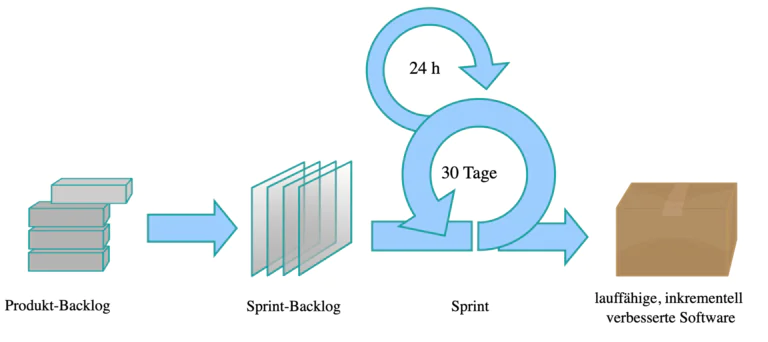
The Daily Scrum is a daily meeting of up to 15 minutes, held standing, where the team aligns on what was done, what will be done, and which obstacles need to be removed. Among its main benefits are more efficient communication, quick identification of obstacles, transparency, and shared responsibility.
Scrum, an agile framework for managing demands, is widely adopted by software development teams worldwide. An essential practice in Scrum is the Daily, also known as Daily Scrum or Daily Stand-up. This daily meeting plays a crucial role in synchronizing demands and team progress. In this article, we will explore what Daily Scrum is, its benefits and practical tips to ensure your daily is more assertive.

What is Daily in Scrum?
The Daily is a short daily meeting (up to 15 minutes), usually held standing to maintain focus and efficiency. Its main objective is to allow the team to share information about work progress, identify obstacles and plan next steps. This practice promotes transparency, collaboration and collective responsibility.
Even though we say "plan next steps", it's important to emphasize that the intention is not broad planning, but rather a look at the demands in focus with the intention of alignment and removal of obstacles.
The three questions of the Daily
During the Daily, each team member can answer three questions:
- What was done since the last meeting?
- What will be done until the next meeting?
- What are the obstacles or challenges encountered?
By keeping these answers concise, the team gets a clear view of progress and can make informed decisions to optimize remaining work.
Flexibility in conducting
It's important to highlight that these questions are not mandatory — they serve only as a guide to make the daily more efficient. You can conduct it the way you find necessary within your context, as long as you maintain a focus on the demands being handled within that work and delivery cycle.
Never lose focus on the daily's objective, which is to understand:
- What was done from the last meeting until the current meeting
- If there is any impediment the team can help remove
- What will be worked on until the next meeting
It's very common, at the beginning of daily implementation, for the team to start losing focus on the meeting. It's important that the Scrum Master can provide the necessary support at the beginning of implementation so that the meeting doesn't lose its objective.
Benefits of Daily in Scrum
Daily Scrum offers several benefits that directly impact team efficiency and collaboration. Let's explore the main ones:
1. Efficient Communication
The Daily facilitates communication between team members, ensuring everyone is on the same page regarding project objectives and progress. This daily synchronization avoids misunderstandings and ensures everyone has visibility of what's happening.
2. Quick Identification of Obstacles
By highlighting obstacles daily, the team can resolve problems more quickly, avoiding significant delays in the project schedule. When an impediment is identified early, there's more time and options to resolve it before it becomes critical.
3. Adaptability and Flexibility
The daily nature of the meeting allows the team to quickly adapt to changes in priorities, requirements or unforeseen circumstances. Instead of waiting weeks to adjust the plan, the team can react the next day.
4. Shared Responsibility
The Daily promotes a sense of collective responsibility, as each team member shares their contributions and challenges, encouraging collaboration. When everyone knows what each one is doing, it becomes easier to offer help and work together.
5. Transparency and Visibility
The daily practice of sharing progress creates transparency about the team's work. Stakeholders and other members of the organization can have a clear view of what's being delivered and the challenges faced.
Tips for a More Assertive Daily
Implementing Daily effectively requires attention to some important details. Here are practical tips to make your Daily more assertive:
1. Maintain Punctuality
Respect the team's time and keep the meeting short and objective to avoid loss of productivity. Start at the agreed time and finish within the established time (usually 15 minutes). If the meeting is lasting longer than that, it's a sign that something needs to be adjusted.
2. Focus on Daily Objective
Make sure each team member contributes with an update on their demand, keeping responses concise and relevant. Without losing focus on the meeting's objective. If someone starts going into technical details or long discussions, the Scrum Master should intervene and suggest the matter be addressed at another time.
3. Promote Everyone's Participation
Encourage active participation from all members, ensuring everyone has the opportunity to share their updates. If someone is always quiet, it may be a sign that they're not engaged or didn't understand the purpose of the meeting.
4. Immediate Action on Obstacles
Identified an obstacle? Take immediate action or assign someone responsible to resolve it before it becomes a significant impediment. Be careful not to address the impediment during the meeting — if you feel the topic has stretched a bit more, schedule a new agenda to address only the impediment in question.
The Daily is not the place to resolve problems, but rather to identify them and create an action plan to resolve them later.
5. Continuous Iteration
Use information collected in the Daily to adjust strategies and plans, promoting a mindset of continuous improvement. If the team notices that something is not working in how the Daily is being conducted, discuss it in the Retrospective and adjust.
6. Choose the Appropriate Time and Location
The Daily should happen at the same time and location every day, preferably at the beginning of the work day. This creates a routine and ensures everyone is present. If the team is distributed, use videoconferencing tools, but maintain consistency.
7. Avoid Status Reports to the Scrum Master
The Daily is not a status report to the Scrum Master or Product Owner. It's a team meeting, for the team. Everyone should talk to each other, not to a specific person. The Scrum Master is there to facilitate, not to receive reports.
Common Mistakes to Avoid
In addition to the tips above, it's important to know the most common mistakes that can turn the Daily into an inefficient meeting:
- Turning it into a status meeting: The Daily is not for reporting status to the manager, but for the team to align
- Discussing solutions during the meeting: Identify the problem, but resolve it later
- Allowing the meeting to exceed 15 minutes: If it's taking longer, something is wrong
- Lack of consistency: Skipping the Daily or constantly changing the time breaks the rhythm
- Lack of preparation: Team members should come prepared to share their updates
Conclusion
Effective implementation of Daily in Scrum requires practice and commitment. By following these tips and recognizing the benefits of this daily practice, teams can maximize their efficiency, collaboration and value delivery to the customer.
Remember: Daily is a powerful tool when used correctly. It's not just a mandatory meeting, but rather a strategic moment to keep the team aligned, identify problems early and ensure everyone is working towards the same objectives.
Start by implementing basic practices, adjust as needed and, over time, your team will develop a Daily that really adds value to daily work.
Here at Learn & Education we offer a complete Scrum course, from basic to advanced, focused on practical application and certification preparation. It's part of G.L.I. Training, which brings together several management and leadership courses (including Scrum). You pay a symbolic amount per month and have access to all courses and exclusive content. Click here to learn more.