
Scrum brings six core benefits: flexibility to change priorities, frequent deliveries, higher quality with constant inspection, greater team engagement, risks controlled earlier, and a satisfied customer with fast feedback. These gains appear when the framework is truly applied, with a present Product Owner and well-facilitated events.
If you're involved in project management, you've probably heard of Scrum. This agile approach is revolutionizing how teams approach projects, delivering more efficient and effective results. But what are the real benefits that appear when you apply Scrum properly? In this article, you'll discover the practical gains that make a difference in your team's and organization's daily work.
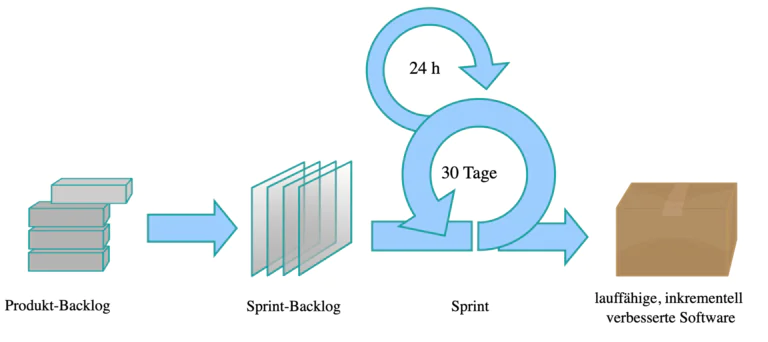
Scrum creates a short rhythm of delivery, feedback, and constant adaptation. This reduces waste, provides visibility to decision-makers, and engages the team sustainably. The benefits aren't just promises — they appear when the framework is applied with the right elements in place.
Why Scrum changes the game in project management
Scrum's differential isn't just in events or artifacts, but in the complete system it creates. While traditional methodologies try to predict everything at the start and follow a rigid plan, Scrum assumes that complexity and uncertainty are part of the work. The framework transforms this reality into a competitive advantage.
What changes in practice? Instead of discovering problems at the end of a months-long project, you identify and fix challenges every two weeks. Instead of stakeholders receiving surprises, they see real progress and give constant feedback. Instead of unmotivated teams executing tasks, you have engaged teams that understand the purpose of the work and participate in decisions. These changes aren't marginal — they transform results.
The main benefits of Scrum in practice
1. Real flexibility to change priorities without chaos
One of Scrum's biggest benefits is the ability to adapt priorities without throwing all the work away. With a living backlog and short Sprints, you can receive an urgent request from management and adjust the next cycle without needing to stop everything that's already been done. This is radically different from traditional projects, where a change mid-way can mean months of rework.
How this works: The Product Owner maintains the prioritized backlog. If something more important appears, they can simply move items and adjust the next Sprint Planning. Work already delivered in previous Sprints remains valid — you don't lose what was built, you just adjust what's coming next.
2. Frequent deliveries align expectations
Stakeholders no longer need to wait months to see if the project is on the right track. Every Sprint (usually 2 to 4 weeks), they receive a ready-to-use product increment. This eliminates negative "surprises" — no more that feeling of "we worked for 6 months and now we discovered that wasn't what you wanted".
The impact: When stakeholders see real and frequent progress, confidence increases. They participate more actively, give feedback earlier, and make more informed decisions. Alignment isn't a monthly meeting — it's a continuous process.
3. Higher quality with constant inspection
Scrum doesn't allow "we'll fix it later". Each Sprint needs to deliver something that works, which forces the team to think about quality from the start. Continuous inspection (in events and artifacts) identifies problems when they're still small and easy to fix.
Why this matters: In traditional projects, quality problems are usually discovered in the testing phase, when fixing is already expensive and time-consuming. In Scrum, Daily Scrum, Review, and Retrospective create multiple inspection points. If something is wrong, you discover it fast and fix it fast.
4. Team engagement and focus
Teams that work with Scrum are generally more engaged because they participate in decisions and understand priorities. Daily Scrum keeps everyone aligned. Review provides visibility to the work done. Retrospective offers a safe space to improve the process. These events aren't just meetings — they're mechanisms that create connection, purpose, and shared responsibility.
The practical difference: Instead of receiving tasks top-down, the team participates in planning, estimates effort, decides how to do the work, and takes responsibility for results. This increases motivation and reduces the feeling of "just executing orders".
5. Risks exposed and controlled earlier
Short cycles expose risks quickly. If there's a technical impediment, an external dependency, or a difficulty in understanding, it appears in the first Dailies of the Sprint — not at the end of months of work. The team can then adjust the plan, seek alternatives, or escalate the problem before it becomes a crisis.
Practical example: Imagine you discover mid-Sprint that an external API isn't working as expected. In a traditional project, this could delay everything for weeks. In Scrum, you adapt the Sprint plan, adjust the backlog, and continue delivering other features while solving the problem. The risk doesn't disappear, but it becomes manageable.
6. Satisfied customer with quick feedback
Frequent feedback keeps the product aligned with what the customer really needs. Instead of building something based only on requirements written months ago, you deliver, receive feedback, adjust, and deliver again. The product evolves toward what really generates value.
The result: Products that really solve real problems. Fewer "beautiful" features that no one uses. More focus on what really matters to those who will use it. Customer satisfaction isn't measured at the end — it's built Sprint by Sprint.
Organizational benefits: beyond the team
Scrum's benefits aren't limited to the development team. They spread throughout the organization in ways that generate strategic value.
Visibility for management and stakeholders
Managers and stakeholders finally have real visibility of progress. Instead of status reports that say "we're 60% complete" (without anyone knowing exactly what that means), they see functional increments every Sprint. They can touch, use, and validate the real work.
This allows more informed and faster decision-making. If something isn't on the right track, you discover it in weeks, not months. If there's a market opportunity, you can pivot quickly. Agility isn't just from the team — it's from the entire organization.
Waste reduction
Scrum helps identify and eliminate waste continuously. Work that doesn't add value appears quickly in Reviews and Retrospectives. Bureaucratic processes that delay deliveries are questioned and optimized. Features that no one uses are discovered early and cut before consuming more resources.
Culture of continuous improvement
Retrospective creates an organizational habit of constantly improving. Teams don't get stuck in bad processes — they identify problems and experiment with solutions every Sprint. This culture of continuous improvement spreads throughout the organization and makes teams more resilient and adaptable.
What makes these benefits appear for real
Scrum's benefits don't appear automatically just by implementing events. They depend on specific conditions that need to be created and maintained.
Present Product Owner and prioritized backlog
The Product Owner needs to be present and available. They keep the backlog always updated and prioritized by business value. Without this, the team works on things that don't matter or waits for decisions that delay deliveries.
Cross-functional team with autonomy
The team needs to have all the necessary skills to deliver the complete increment. It's no use having a team that depends on people outside the Sprint to complete the work. Additionally, the team needs autonomy to decide how to do the work — micromanagement kills agility.
Well-facilitated and lean events
Scrum events need to be respected and well-facilitated. Daily Scrum that becomes a status meeting doesn't work. Planning that lasts all day due to excessive detail gets in the way. Review without present stakeholders loses its purpose. Each event has a specific objective and needs to be protected.
Clear and respected Definition of Done
Without a clear Definition of Done, the team can deliver things that are "almost ready" that will generate rework later. The DoD needs to be agreed upon by the team and applied rigorously. This ensures that each increment really works and can be used.
How to measure Scrum benefits
Scrum benefits can be measured in objective ways. You don't need to rely only on "feeling" — you can track concrete metrics.
- Velocity/Throughput: how many backlog items are delivered per Sprint. Should increase or stabilize at a healthy level.
- Lead Time: time between an idea being added to the backlog and being delivered. Should decrease.
- Quality: number of bugs found in production, rework rate. Should improve.
- Engagement: participation in retrospectives, improvement suggestions, absenteeism. Engaged teams participate more.
- Customer satisfaction: feedback in Reviews, feature usage, NPS. Should increase.
The important thing isn't to measure everything at once, but to choose some relevant metrics for your context and track them over time. Numbers tell a story — use them to validate if benefits are appearing.
Benefits of Scrum: more than a list
Scrum's benefits aren't a list of "good things" you receive passively. They're results of a well-applied system, where transparency, inspection, and adaptation happen consistently. When you implement Scrum for real — not just "doing the ceremonies" — these benefits appear naturally.
Most importantly, understand that Scrum isn't a magical solution. It requires commitment, discipline, and time to mature. Teams need to learn to work agilely, organizations need to support this change, and Product Owners need to really prioritize value. When all of this aligns, the benefits are transformative.
Here at Learn & Education we offer a complete Scrum course, from basic to advanced, with a focus on practical application and certification preparation. It's part of the G.L.I. Formation, which brings together various management and leadership courses (including Scrum). You pay a symbolic monthly fee and have access to all courses and exclusive content. Click here to learn more.